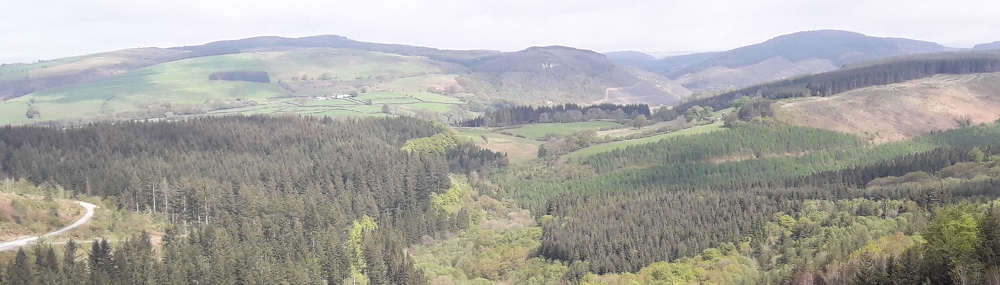
NRW Storm Darragh update and Community drop-in sessions
Posted on 26th February 2026
Update on Natural Resources Wales’ (NRW) long-term programme to recover forests across south-west Wales following the extensive damage caused by Storm Darragh in December 2024.
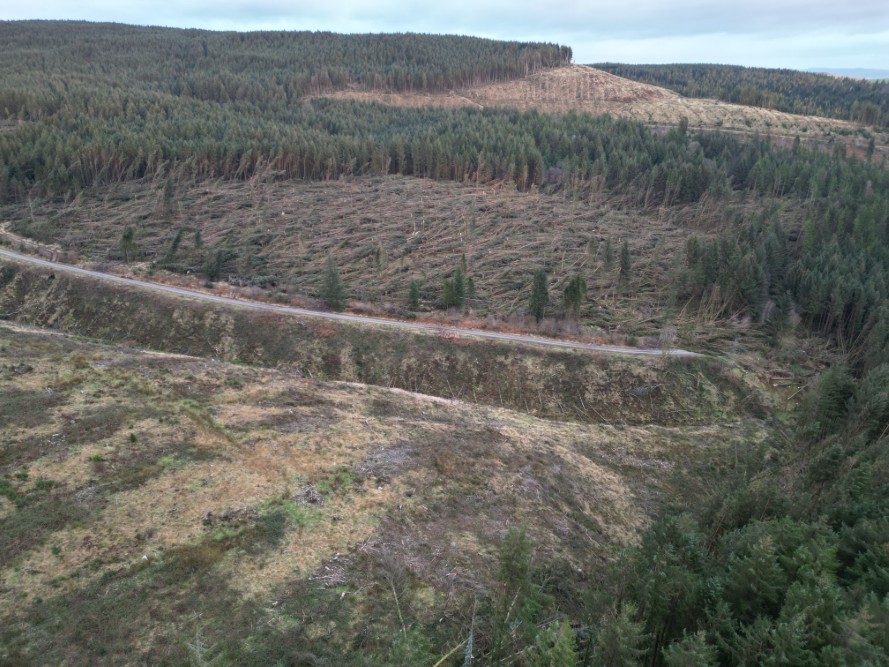
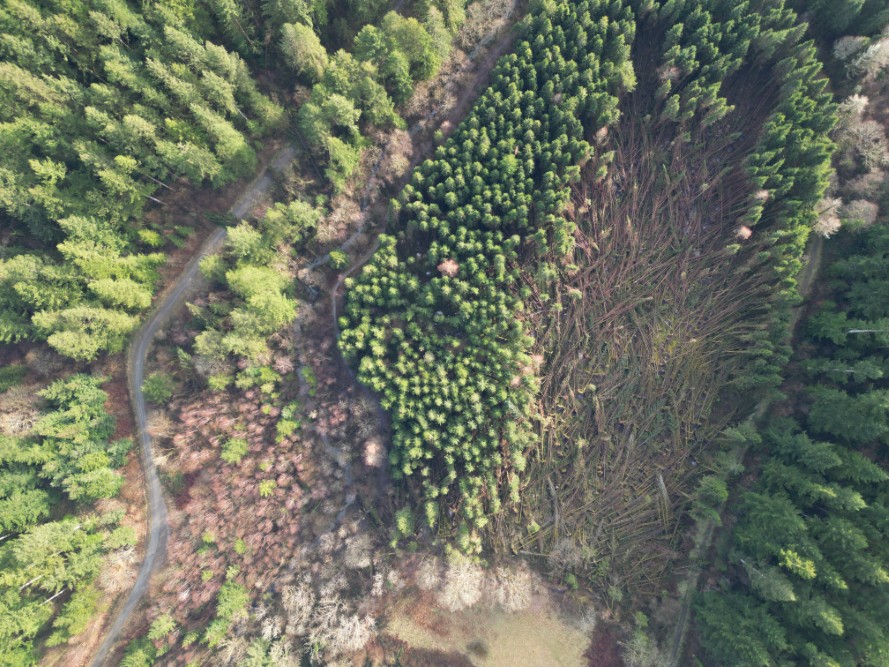
The storm resulted in over 650 hectares (ha) of windblown trees that particularly affected forests across Carmarthenshire and the surrounding area. We are now progressing with a phased harvesting and replanting programme that will run over the next three to five years.
The recovery programme is designed to balance public safety, environmental protection, and timber market stability, ensuring that windblow recovery is sustainable and does not overwhelm local supply chains or harm sensitive habitats.
Phased harvesting and replanting
Work is now underway to clear damaged areas and planning for restocking. Approximately 200 ha of windblown trees have already been incorporated into NRW’s existing harvesting operations, while a further 450 ha have been mapped and scheduled for phased recovery.
Timings for each site will depend on factors such as weather conditions, conservation surveys, site access, and contractor availability.
Community drop-in sessions
We are holding two community drop-in sessions for residents, community groups and forest users to learn more about our recovery plans and we would welcome your views.
Maps, proposed timescales, and details of environmental considerations will be available, and NRW officers will be on hand to answer questions.
- Thursday, 5 March, 1-5pm, at Pumsaint Hall, SA19 8US – covering Caio and Cwm Rhaeadr forests.
- Friday, 6 March, 1-5pm, at Brechfa Hall, SA32 7RA, covering Brechfa Forest
For those unable to attend, we have information on each affected area online with opportunities to submit questions or comments: https://bit.ly/StormDarraghRecovery
Our teams
Our south-west Wales Forest Operations and Land Management teams are coordinating the recovery programme alongside their day‑to‑day responsibilities across the 10,900 ha Welsh Government Woodland Estate.
We are grateful for your continued patience as we undertake this complex and often challenging work.
Our priority is to ensure that our forests remain safe, sustainable, and resilient safeguarding the long-term health of Wales’ forests for future generations.

Activities in the Forest
Early Bird Enduro
Sunday 4th October 2026
Welsh Trail Riders Association
www.wtra.co.uk
Open access to the forest will be suspended during this motor sport event.